SlimSet Official Website › Choosing A Formula
Choosing A FormulaChoosing A Metabolism Supplement
Seven questions settle more about a metabolism supplement than any brand comparison will.
Printed amounts, printed standardisations, whether those amounts reach a researched dose, a caffeine total, a readable test, a refund route and a claims ceiling. Applied to SlimSet at the end, it passes three and fails two.
A scorecard you can carry to any bottle, applied last to the product this website sells.
Why a checklist beats a brand comparison
Seven questions about how a label is built, which is the part that does not change when the brands do.
Comparison articles in this category go stale in a month and were usually written to rank whoever pays most anyway. A checklist does not go stale, because the questions it asks are about how a label is constructed rather than about which label it is.
The seven checks below can be run on any bottle in about five minutes, using only what is printed on it and what the seller publishes. Six of the seven have a yes-or-no answer. The seventh needs a calculator, and it is the one that decides everything.
- Establishing whether the label can be checked at all.
- Converting whatever it prints into the compound the research studied.
- Comparing that figure with a published dose rather than with a feeling.
- Finding out whether anybody has tested the bottle.
- Finding out what happens when you want your money back.
The seven checks
Six yes-or-no questions and one that needs arithmetic.
1. Is an amount printed against every active?
A proprietary blend gives a total for several ingredients at once, which means none of them can be evaluated. A panel with a milligram figure on every row can be. This single question eliminates most of the category before you look at anything else.
2. Is the standardisation printed?
An extract is only as useful as the compound it is concentrated for. “50% chlorogenic acids” in brackets turns a plant name into a number. A row that names a plant and a weight without a percentage cannot be converted into anything comparable.
3. Does the amount reach the dose the research used?
This is the calculator question and it is where almost everything fails. Apply the percentage to the milligrams, then set the answer beside the daily dose in the trial the marketing is borrowing from. A tenth of a trial dose is not a smaller version of the same result.
4. Is the caffeine declared, and can you total it?
Caffeine should be its own row with its own figure. Then check the botanicals: green tea, green coffee and guarana all carry caffeine, and most labels do not say how much. A bottle that cannot be totalled is a bottle you are adding to your day blind.
5. Can anybody read a test result?
Not a seal, not a lot number and not a certificate reference. An actual document naming a laboratory, a date, a method and a result. Very few products in this category have one, and knowing that is more useful than assuming either way.
6. Is there a refund route with a human at the end of it?
A telephone number that answers, a stated window counted in real days, and a policy on opened bottles. A guarantee that requires unopened product is not a guarantee about whether the product suits you.
7. Does the label claim only what a label may claim?
Read the bottle and then the sales page. Claims that appear only on the page belong to whoever wrote the page. A product whose label and website say the same thing is being sold by somebody paying attention.
Scoring SlimSet against all seven
The same seven questions, run on the product this website sells, with the failures printed first in the paragraphs below.
| Check | Result | Why |
|---|---|---|
| 1. Amount printed against every active | Pass | All 5 rows carry a milligram figure. No proprietary blend. |
| 2. Standardisation printed | Partial | Three of five rows print one: 50% chlorogenic acids, 50% HCA, and the green tea row with three nested percentages. Raspberry ketone needs none. Caffeine anhydrous needs none. |
| 3. Amount reaches the researched dose | Fail | Four of five sit well below. About 65 mg of chlorogenic acids against a 500 mg threshold, about 65 mg of HCA against a 1,500 mg trial that failed anyway, about 58.5 mg of EGCG against 270 mg, and no human dose exists for raspberry ketone. |
| 4. Caffeine declared and totalled | Partial | 138 mg is declared as its own row, which is better than most. The green tea is capped at under 3% caffeine, and the green coffee figure is published nowhere, so no total can be reached. |
| 5. A test result anybody can read | Fail | None exists. Lot SLI-26/MY-3272 and certificate reference SLI-3272-26-MY are filing references, and no laboratory is named. |
| 6. A refund route with a human at the end | Pass | 60 days from purchase, opened bottles included, one telephone number that issues the authorisation. |
| 7. Label claims only what a label may claim | Pass | The bottle prints two lines and nothing more. Appetite control, fat metabolism and steady energy appear on the seller’s page only. |
Three passes, two partials, two failures. Scored on the same seven questions any other bottle in this category would get.
The two rows it fails, in detail
Two failures, stated before the passes, because a scorecard that buries its failures is a ranking article in disguise.
Check three is the one that matters most, and it fails clearly. The panel prints 130 mg of green coffee extract at 50% chlorogenic acids, which is about 65 mg of chlorogenic acids a day against the 500 mg threshold where the 2023 meta-analysis found its 1.30 kg result. That is roughly an eighth.
The garcinia row is starker. About 65 mg of hydroxycitric acid against the 1,500 mg a day the JAMA trial used, and that trial found nothing. It is a twenty-third of a dose that already failed. The green tea delivers about 58.5 mg of EGCG against the 270 mg behind the chamber result, and raspberry ketone at 130 mg has no human trial at any dose to be compared with.
Check five fails for a different reason, and it is a category failure rather than a product one. No third-party certificate of analysis is published for this bottle. The four roundels in the marketing pack name no certifying body and carry no certificate number, which is set out in full on the testing and quality page.
The reason it is worth failing rather than excusing is the caffeine. Measured caffeine content in thermogenic capsules has been found to differ from the declared figure often enough to be a general finding, and 138 mg is the largest row on this label.
The rows it passes, and what they are worth
Three genuine passes, and an honest account of what each one is worth.
Check one is a real pass and it is rarer than it should be. Five rows, five milligram figures, no blend hiding anything. That is why every number in the failing rows above could be calculated at all: a proprietary blend would have made check three unanswerable rather than negative.
Check six is the other substantive pass. 60 days from the date of purchase with opened bottles included is longer and more generous than the category norm, and it is backed by a telephone number rather than a form. The refund policy page sets out the five steps and the two waits that follow.
Check seven passes because the bottle claims almost nothing. Two printed lines and the disclaimer box, with the appetite and metabolism language living on the seller's own page. This website attributes that language to the seller wherever it appears, which is the only honest way to handle a gap between a label and a sales page.
They buy the ability to check. A panel you can convert, a window you can use and a claims ceiling you can read means a buyer can answer the question on their own body for $89 and send the bottle back inside 60 days if the answer is no. That is not the same as evidence that it works, and it is worth more than a badge.
Applying the same seven to anything else
Four failure patterns you will meet on almost any shelf in this category.
The checklist is not about this product and it produces uncomfortable answers about most of the category. Four patterns come up again and again, and recognising them is most of the work.
- A proprietary blend with an impressive total. Check one fails and every later check becomes unanswerable.
- A plant name with a weight but no percentage. Check two fails, so check three cannot be run.
- A botanical carrying undeclared caffeine with no separate caffeine row. Check four fails and the day cannot be totalled.
- A wall of seals naming no body and no number. Check five fails, whatever the seals look like.
A bottle that passes checks one, two and three together is genuinely unusual, and it is usually a single-ingredient product rather than a blend. That is itself a useful finding: reaching a researched dose of anything takes most of a capsule, which is why five-ingredient formulas so rarely reach one.
What this checklist cannot tell you
Four things a label score cannot settle, including the one that matters most to you.
Seven checks evaluate a label. They do not evaluate a person, and four limits are worth stating plainly before anybody treats a score as a verdict.
- A bottle passing all seven has still never been tested as a finished product. Nothing in this category has.
- A bottle failing check three may still suit somebody, because the caffeine alone is a real ingredient and it is declared.
- Nothing here weighs interactions with a medicine you are already taking, which is a question about you rather than about the label.
- Price is deliberately not one of the seven. A cheap bottle that fails check one is not a bargain.
The honest summary of applying it to this product is short. The panel is better than the category norm, the amounts are smaller than the research, the testing is absent, the refund route is genuinely good, and the 60-day window is the mechanism that lets a buyer settle the rest of it themselves.
Sources behind the seven checks
The dose-bearing papers the third check compares against, and the label artwork.
- Kanchanasurakit S, Saokaew S, Phisalprapa P, et al. Chlorogenic acid in green bean coffee on body weight: a systematic review and meta-analysis of randomized controlled trials. Syst Rev. 2023;12(1):163. PMID 37710316. https://pubmed.ncbi.nlm.nih.gov/37710316/
- Heymsfield SB, Allison DB, Vasselli JR, et al. Garcinia cambogia (hydroxycitric acid) as a potential antiobesity agent: a randomized controlled trial. JAMA. 1998;280(18):1596-600. PMID 9820262. https://pubmed.ncbi.nlm.nih.gov/9820262/
- Dulloo AG, Duret C, Rohrer D, et al. Efficacy of a green tea extract rich in catechin polyphenols and caffeine in increasing 24-h energy expenditure and fat oxidation in humans. Am J Clin Nutr. 1999;70(6):1040-5. PMID 10584049. https://pubmed.ncbi.nlm.nih.gov/10584049/
- Li X, Wei T, Wu M, et al. Potential metabolic activities of raspberry ketone. J Food Biochem. 2022;46(1):e14018. PMID 34913499. https://pubmed.ncbi.nlm.nih.gov/34913499/
- Longhi GS, Crocoli LC, Armando YP, et al. Too much or too little caffeine? Determination of content in thermogenic capsules by quantitative 1H nuclear magnetic resonance (qNMR). J Pharm Biomed Anal. 2025;261:116832. PMID 40179616. https://pubmed.ncbi.nlm.nih.gov/40179616/
- Nawrot P, Jordan S, Eastwood J, et al. Effects of caffeine on human health. Food Addit Contam. 2003;20(1):1-30. PMID 12519715. https://pubmed.ncbi.nlm.nih.gov/12519715/
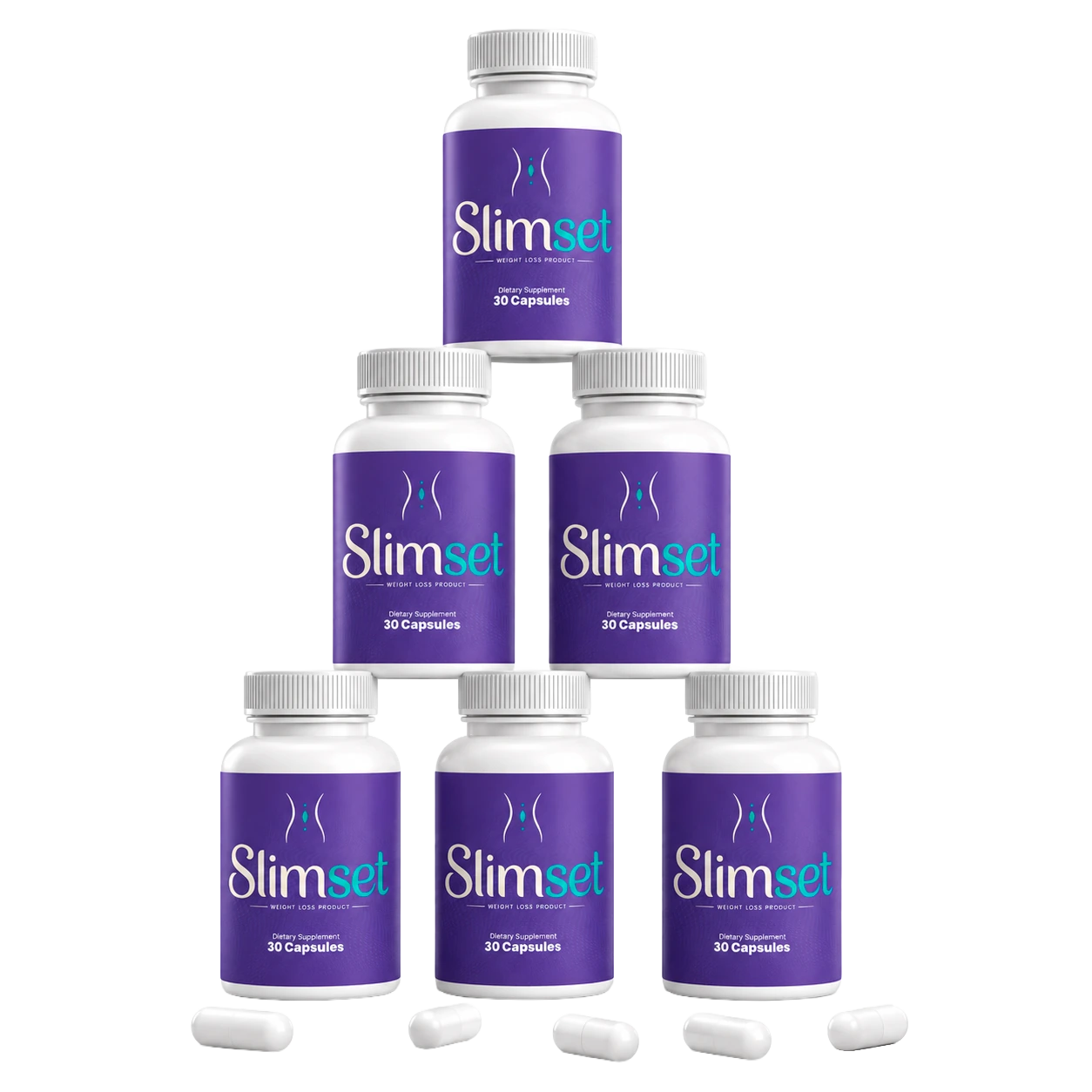
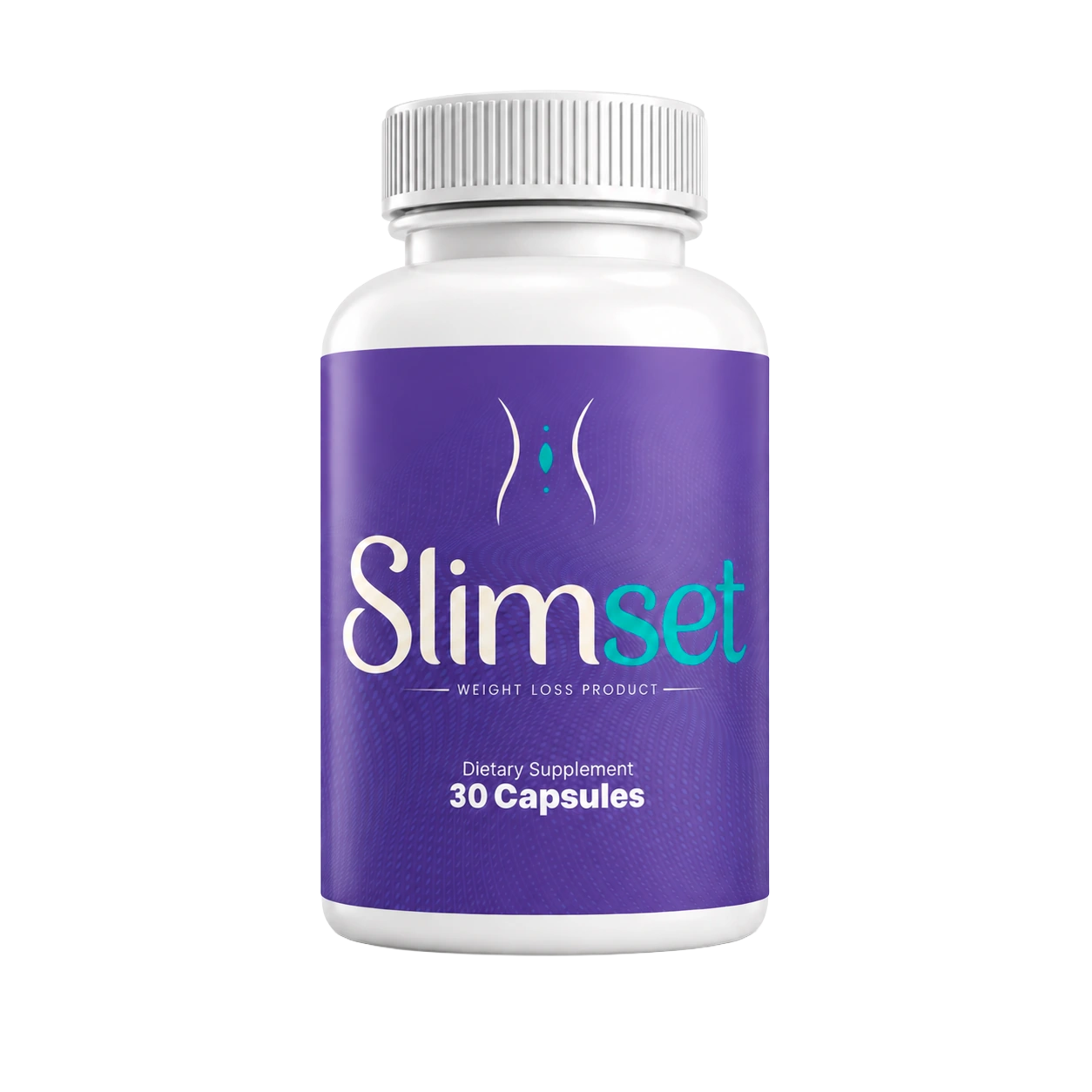
- SlimSet product label artwork, supplied in the vendor asset pack. Serving size one capsule, 30 per container. Distributed by Slimset, PO Box 12730, Ogden, UT 84412.
Order SlimSet with the scorecard in front of you
Three passes, two partials and two failures, printed rather than implied, and 60 days from purchase to settle it on your own body.
One bottle $89 · six bottles $294 · 60-day money-back guarantee
Order SlimSet On The Official WebsiteOne capsule a day · 30 per bottle · lot SLI-26/MY-3272