SlimSet Official Website › Blog › Chlorogenic Acid And The 500 mg Threshold
Chlorogenic Acid And The 500 mg Threshold
Green coffee extract has the cleanest evidence shape in this whole category, and that shape is a threshold rather than a curve. A pooled result exists, it is worth 1.30 kg against placebo, and it appears only above a dose almost no retail capsule carries.
What chlorogenic acid is
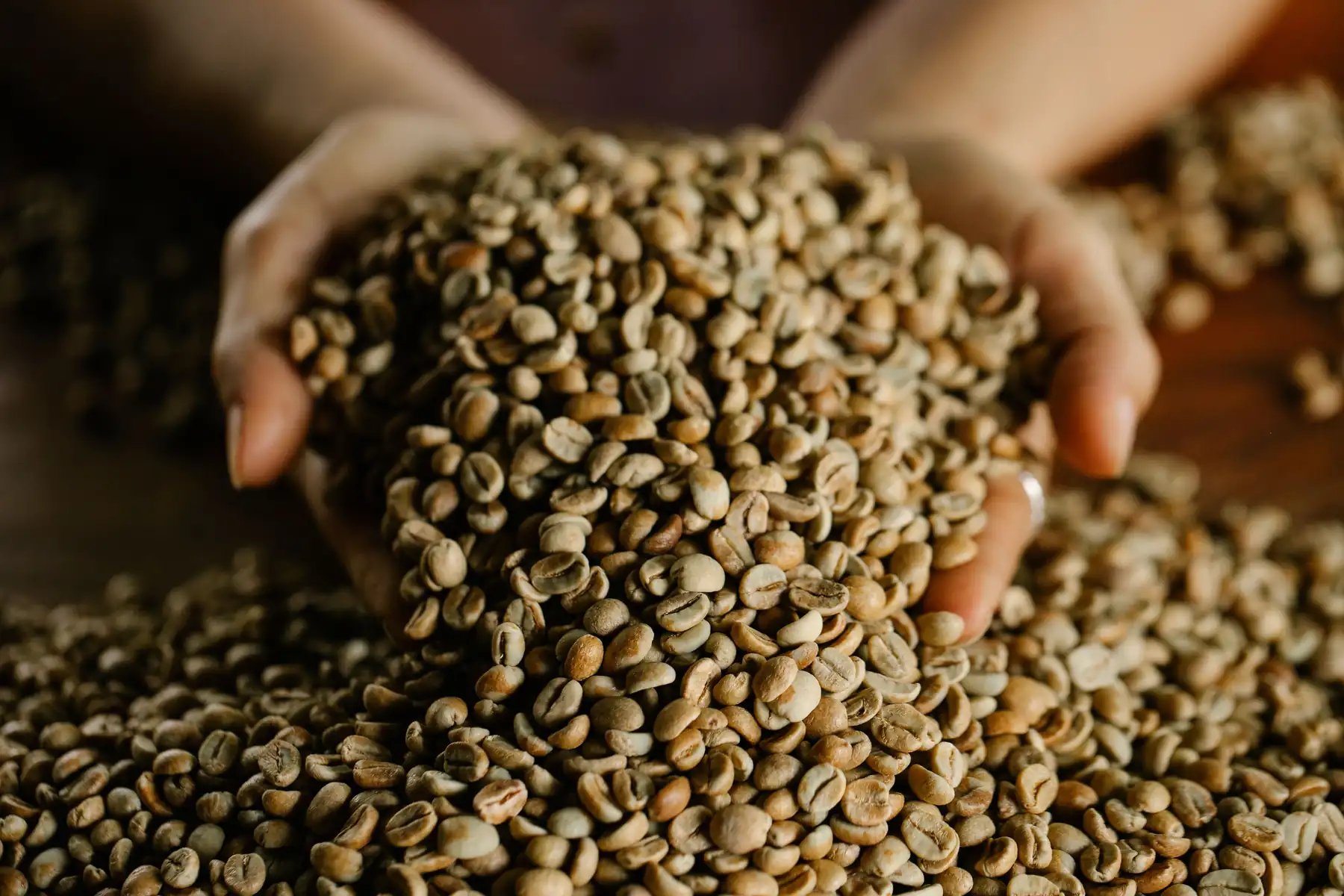
Chlorogenic acids are a family of polyphenols found in coffee beans, and their concentration falls sharply during roasting. That single fact is the whole reason green coffee extract exists as a product: the beans are left unroasted so the compounds survive, and the extract is then standardised to a stated percentage.
Standardised means concentrated to a known proportion. A 50 per cent chlorogenic acid extract is half chlorogenic acids by weight and half everything else the bean carried through the extraction, including some caffeine, because green coffee is still coffee.
The proposed mechanism concerns glucose absorption and carbohydrate handling. A twelve-week comparison looked at exactly that, measuring glucose absorption in healthy volunteers alongside body mass over the trial. A controlled crossover in healthy adults examined the acute effects on gut hormone secretion and glucose tolerance, which is the short-term version of the same question.
The threshold, and where it came from
A 2023 systematic review and meta-analysis is the paper worth knowing. It pooled the randomised controlled trials of chlorogenic acid from green coffee and reported a body weight advantage over placebo of 1.30 kg, with a confidence interval that did not cross zero, no meaningful heterogeneity between studies and no detectable publication bias.
That is a respectable result by the standards of this category, and it comes with a condition attached. The effect appeared at chlorogenic acid intakes of 500 mg a day and above. Below that level, the pooled analysis has nothing to report.
A threshold is a different kind of finding from a gradient. A gradient means half the dose buys you some fraction of the effect. A threshold means half the dose buys you nothing that the pooled data can detect. Marketing copy in this category consistently treats the first as though it were the second.
| The study | What it gave | What it found |
|---|---|---|
| Kanchanasurakit 2023, systematic review and meta-analysis | Pooled trials, split by chlorogenic acid dose | A 1.30 kg advantage over placebo, appearing only at 500 mg a day and above |
| Asbaghi 2022, dose-response meta-analysis | Pooled green coffee extract trials | No association between dose and any anthropometric change |
| Gorji 2019, dose-response meta-analysis | Pooled trials in obesity | Effects reported, with the authors noting small and short studies |
| Roshan 2018, eight-week randomised trial | 400 mg of extract twice daily | Changes in anthropometric indices over eight weeks |
| Thom 2007, twelve-week comparison | A chlorogenic-acid-enriched coffee | Differences in glucose absorption and body mass over twelve weeks |
| Onakpoya 2011, systematic review | The trials available at the time | The evidence was limited by small, short and poorly reported studies |
Six entries, each read for the daily amount it used. The first row is the one that matters, because it is the only one that reports where the effect starts.
The meta-analysis that found nothing
Good practice means printing the counterweight in the same article rather than a different one. A dose-response meta-analysis approached the same literature from the opposite direction and found no association between green coffee extract dose and any anthropometric change at all.
A 2019 dose-response meta-analysis in obesity reported effects while noting the same weakness every review of this literature notes: the trials are small, they are short, and they are not always well reported. The 2011 systematic review said so first and nothing since has overturned it.
Two pooled analyses of overlapping trials disagreeing is not a scandal either. It means the underlying evidence is thin enough that methodological choices move the answer, which is itself a finding worth carrying to a shelf.
- One pooled analysis reports 1.30 kg against placebo, at 500 mg a day and above.
- Another finds no dose-response relationship at all.
- Every review notes the trials are small and short.
- The single most cited trial in this field has been retracted.
- No result anywhere describes a finished multi-ingredient capsule.
What a 130 mg row at 50 per cent delivers
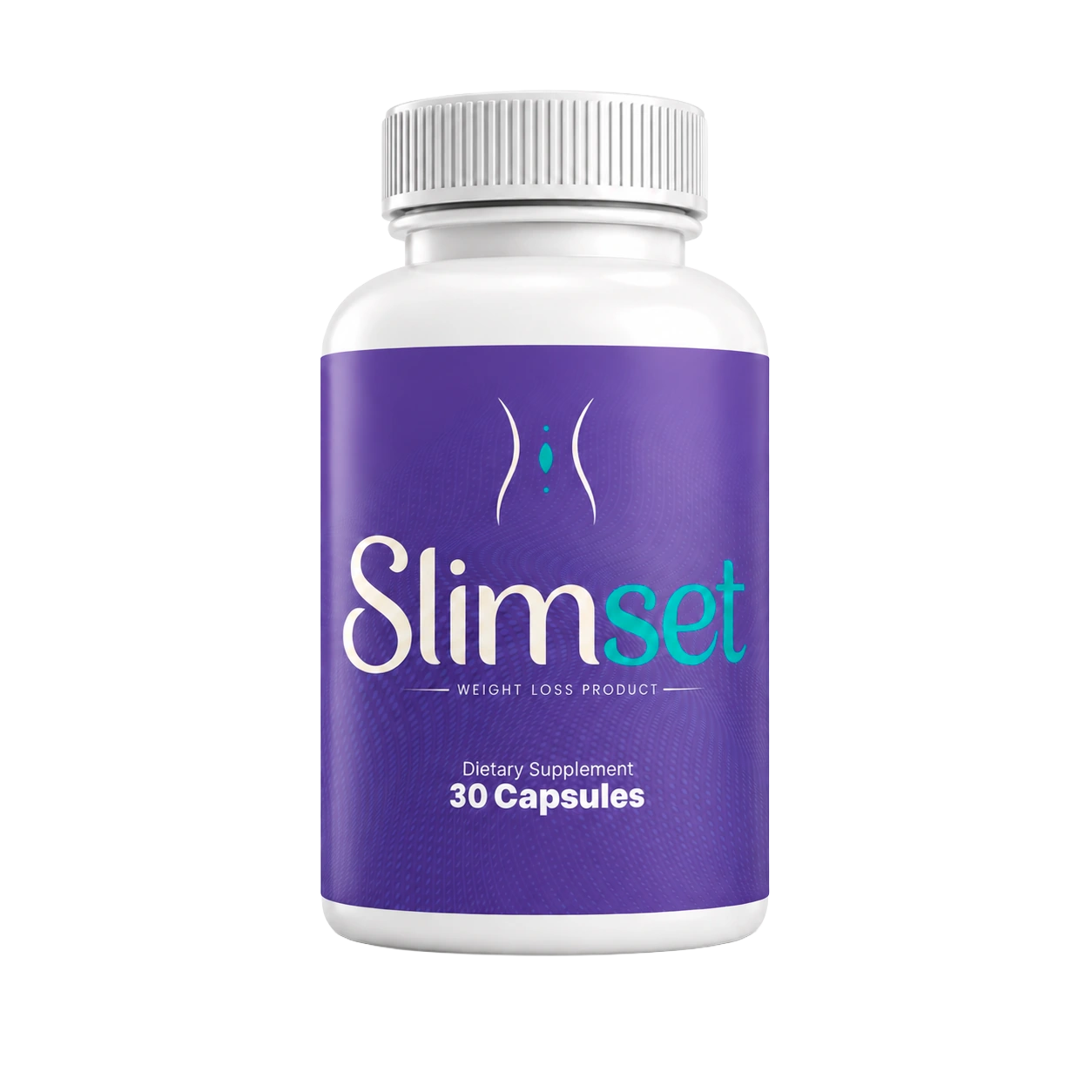
This is arithmetic rather than opinion. The SlimSet panel prints green coffee bean extract at 130 mg with 50 per cent chlorogenic acids in brackets. Half of 130 is 65. One capsule delivers about 65 mg of chlorogenic acids a day.
Set that against a threshold of 500 mg a day and the gap is roughly eightfold. Reaching the threshold from this extract would take about eight capsules, which is not what the label directs and not what anybody should do.
| This panel | The threshold | |
|---|---|---|
| Green coffee extract printed | 130 mg | — |
| Standardisation printed | 50% chlorogenic acids | — |
| Chlorogenic acids delivered | about 65 mg a day | 500 mg a day and above |
| Capsules that would reach it | Roughly eight a day | One day’s dose |
| What the pooled result was | — | 1.30 kg against placebo |
The left column is the label’s own figures carried through its own percentage. The right column is what the 2023 meta-analysis reports.
It is worth being precise about what that table does and does not say. It does not say the capsule has no effect. It says the published pooled result cannot be used to predict one, because the pooled result reports where the effect starts and this amount is a long way below it.
It is also worth noting what makes the comparison possible. The bracket. Without a printed standardisation, 130 mg of green coffee extract is an unknown quantity of chlorogenic acids and the sum above cannot be done at all. An analysis of commercial green coffee extracts found the actual chlorogenic acid content of products on sale varied widely from what was claimed, which is exactly why a printed percentage is worth having and also why it is a claim rather than a measurement.
What a product at the threshold would look like
It is worth picturing the bottle that would reach 500 mg of chlorogenic acids a day, because the picture explains why so few exist.
From a 50 per cent extract, 500 mg of chlorogenic acids needs a gram of extract. A gram is roughly two large capsules of green coffee extract and nothing else, taken every day, with no room left for anything to sit beside it. That is a single-ingredient product with a two-capsule serving, and it looks nothing like a five-active formula.
The arithmetic is the same for every other ingredient class in this category, which is the structural problem with multi-ingredient capsules. A capsule holds a finite amount of powder. Dividing that space five ways guarantees that no single row reaches a researched dose, and adding a sixth ingredient makes every existing row smaller.
- 500 mg of chlorogenic acids from a 50% extract needs a gram of extract a day.
- A gram of powder is around two large capsules with nothing else in them.
- A five-ingredient formula divides one capsule’s space five ways.
- Adding an ingredient to a fixed capsule size makes every other row smaller.
- Single-ingredient products at researched doses are usually cheaper as well.
That is not an argument against blends as such. It is an argument for knowing what you are buying: a blend is a bet that several small amounts do something together that none of them does alone, and no trial of a finished blend in this category has tested that bet.
See all five SlimSet rows converted the same way
Three of the five print a standardisation, so three of the five can be carried through to the compound the research studied. The supplement facts page does all of them and sets each beside its trial dose.
One bottle $89 · six bottles $294 · 60-day money-back guarantee
Order SlimSet On The Official WebsiteOne capsule a day · 30 per bottle · lot SLI-26/MY-3272
The trial that made it famous, and was withdrawn
Green coffee extract became a mass-market ingredient after a small crossover trial reported striking results and received enormous television coverage. That trial has since been retracted, and PubMed flags it as such.
It is still cited. Affiliate pages, product descriptions and category round-ups continue to lean on a paper that no longer stands, years after its withdrawal, because a retraction removes a paper from the record far more slowly than publication put it there.
The habit this should build is simple and it applies to every ingredient rather than this one. When a marketing page leans on a single dramatic study, look the study up. A retraction notice is printed on the record page and takes about ten seconds to find.
The appetite question, separately
Body weight is not the only outcome studied here. An eight-week appetite study looked at the acute and regular effects of a green coffee preparation on appetite and satiety measures, which is a different endpoint with its own literature.
Appetite endpoints are softer than chamber measurements. They usually rest on self-reported hunger scales, sometimes alongside measured food intake, and they are more sensitive to expectation than a twenty-four hour energy expenditure figure is. That does not make them worthless; it makes them weaker evidence than the marketing usually implies.
For a reader holding a bottle, the practical version is this: if the appetite literature is what a product is leaning on, ask what dose produced the result and whether anybody measured what was actually eaten.
What this means at a shelf
- Find the standardisation. A green coffee row with no percentage cannot be evaluated at all.
- Do the sum. Percentage times milligrams equals the compound the research studied.
- Compare with 500 mg a day, which is where the pooled effect appears.
- Remember that green coffee carries caffeine, usually without a figure beside it.
- Look up any single dramatic trial a page leans on, and check it still stands.
Applied to this particular bottle, the answer is that the row is printed, the percentage is printed, the sum comes to about 65 mg, and 65 mg is an eighth of the threshold. All four of those statements are facts about a label rather than opinions about a product, and a reader can check every one of them in under a minute.
That is the whole argument for printed standardisations. A panel that can be checked is a panel that can disappoint you honestly, which is a better outcome than one that cannot disappoint you at all.
References
- Kanchanasurakit S, Saokaew S, Phisalprapa P, et al. Chlorogenic acid in green bean coffee on body weight: a systematic review and meta-analysis of randomized controlled trials. Syst Rev. 2023;12(1):163. PMID 37710316. https://pubmed.ncbi.nlm.nih.gov/37710316/
- Asbaghi O, Sadeghian M, Rahmani S, et al. The effect of green coffee extract supplementation on anthropometric measures in adults: a comprehensive systematic review and dose-response meta-analysis of randomized clinical trials. Complement Ther Med. 2020;51:102424. PMID 32507437. https://pubmed.ncbi.nlm.nih.gov/32507437/
- Onakpoya I, Terry R, Ernst E. The use of green coffee extract as a weight loss supplement: a systematic review and meta-analysis of randomised clinical trials. Gastroenterol Res Pract. 2011;2011:382852. PMID 20871849. https://pubmed.ncbi.nlm.nih.gov/20871849/
- Gorji Z, Varkaneh HK, Talaei S, et al. The effect of green-coffee extract supplementation on obesity: a systematic review and dose-response meta-analysis of randomized controlled trials. Phytomedicine. 2019;63:153018. PMID 31398662. https://pubmed.ncbi.nlm.nih.gov/31398662/
- Roshan H, Nikpayam O, Sedaghat M, et al. Effects of green coffee extract supplementation on anthropometric indices, glycaemic control, blood pressure, lipid profile, insulin resistance and appetite in patients with the metabolic syndrome: a randomised clinical trial. Br J Nutr. 2018;119(3):250-258. PMID 29307310. https://pubmed.ncbi.nlm.nih.gov/29307310/
- Thom E. The effect of chlorogenic acid enriched coffee on glucose absorption in healthy volunteers and its effect on body mass when used long-term in overweight and obese people. J Int Med Res. 2007;35(6):900-8. PMID 18035001. https://pubmed.ncbi.nlm.nih.gov/18035001/
- Vinson JA, Burnham BR, Nagendran MV. Randomized, double-blind, placebo-controlled, linear dose, crossover study to evaluate the efficacy and safety of a green coffee bean extract in overweight subjects. Diabetes Metab Syndr Obes. 2012;5:21-7. PMID 22291473. Retracted Publication. https://pubmed.ncbi.nlm.nih.gov/22291473/
- Redondo-Puente M, Mateos R, Seguido MA, et al. Appetite and satiety effects of the acute and regular consumption of green coffee phenols and green coffee phenol/oat beta-glucan nutraceuticals in subjects with overweight and obesity. Foods. 2021;10(11):2511. PMID 34828792. https://pubmed.ncbi.nlm.nih.gov/34828792/
- Vinson JA, Chen X, Garver DD. Determination of total chlorogenic acids in commercial green coffee extracts. J Med Food. 2019;22(3):314-320. PMID 30888913. https://pubmed.ncbi.nlm.nih.gov/30888913/
- SlimSet product label artwork, supplied in the vendor asset pack. Serving size one capsule, 30 per container. Distributed by Slimset, PO Box 12730, Ogden, UT 84412.