SlimSet Official Website › Blog › How Much Caffeine Is Really In It
How Much Caffeine Is Really In SlimSet?
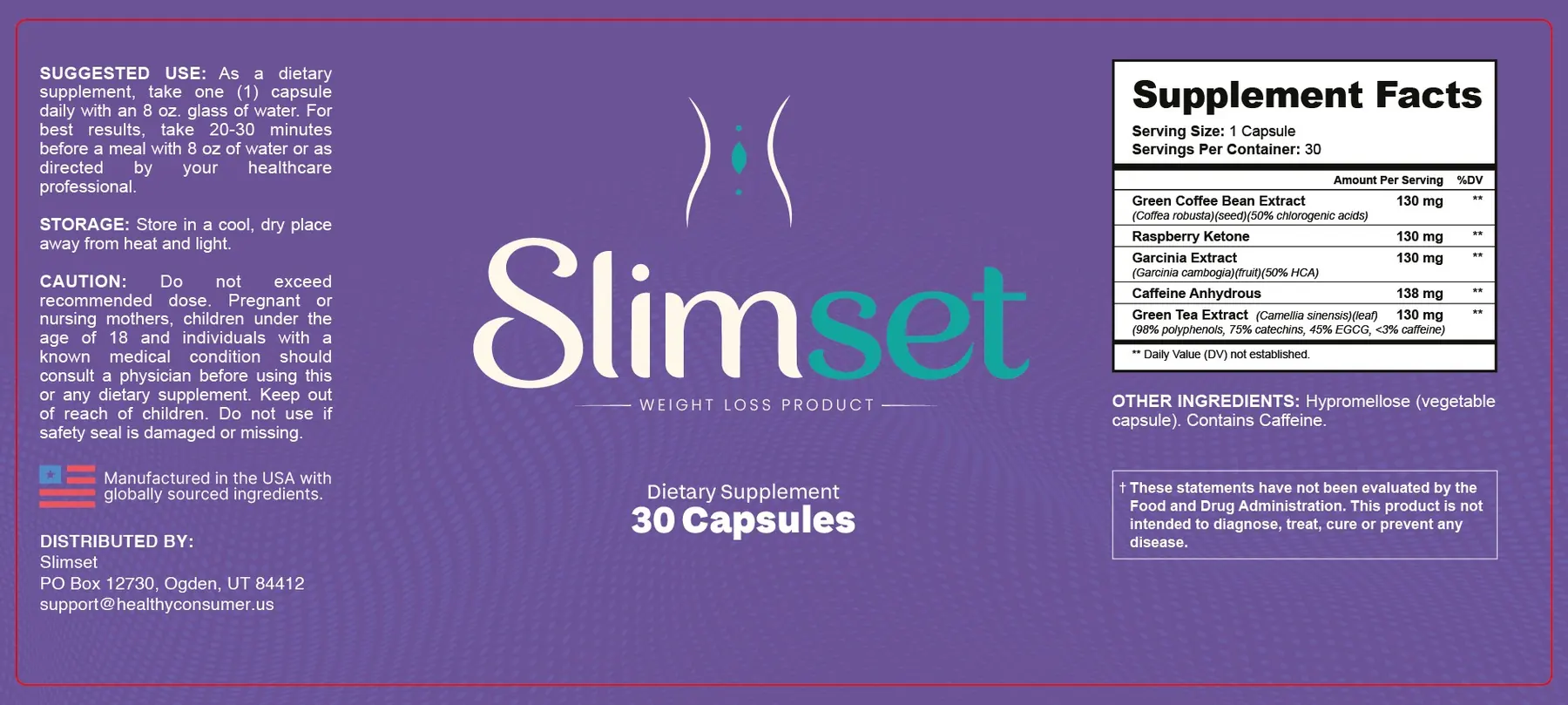
The panel prints 138 mg of caffeine anhydrous, which is more than a mug of brewed coffee in a single capsule. It is also not the whole figure, because two of the four botanicals beside it carry caffeine of their own and only one of them publishes how much.
The row that is declared
One capsule, thirty to a bottle, and the fourth row on the panel reads caffeine anhydrous at 138 mg. Anhydrous simply means the water has been removed, so it is caffeine powder rather than caffeine arriving inside a plant extract. It is the largest single amount on this panel, larger than any of the four botanicals sitting beside it.
For scale, a mug of brewed coffee runs roughly 80 to 100 mg depending on how it is made and how big the mug is. A standard espresso is about 63 mg. A can of cola is about 34 mg. So one capsule, taken before breakfast, is already somewhere between a strong espresso and a full mug of coffee, before anything is poured.
Declaring it as a separate row deserves credit. Plenty of products in this category carry their caffeine inside a guarana or green tea line with no figure attached, which leaves a buyer no way to total their day at all. This label does not do that, and the panel is readable because of it.
- 138 mg is the caffeine anhydrous row, printed exactly.
- A mug of brewed coffee is roughly 80 to 100 mg.
- The published ceiling for healthy adults is 400 mg a day.
- One capsule is therefore over a third of that ceiling on its own.
- It is the largest single row on the panel, ahead of all four botanicals.
The caffeine nobody has counted
Two of the four botanicals on this panel carry caffeine, and this is where the arithmetic stops being clean. Green tea extract is standardised at under 3 per cent caffeine, which is printed in the brackets. Applied to a 130 mg row, that caps its contribution at about 3.9 mg, which is small and, more importantly, bounded.
Green coffee bean extract is the problem. It is unroasted coffee, standardised for chlorogenic acids rather than for caffeine, and nothing on this label says how much caffeine comes with it. Unroasted coffee beans are not decaffeinated coffee beans. The figure is real, it is not zero, and it is not published anywhere.
| Where the caffeine comes from | What the label prints | What that works out at |
|---|---|---|
| Caffeine anhydrous, its own panel row | 138 mg | 138 mg, declared and exact |
| Green tea extract | 130 mg at under 3% caffeine | Up to about 3.9 mg |
| Green coffee bean extract | 130 mg, caffeine content not printed | Unknown, and green coffee is not decaffeinated |
| Raspberry ketone | 130 mg | None |
| Garcinia extract | 130 mg | None |
| Total | — | Above 138 mg, with no published figure |
Read from the printed panel. The bottom row is the one nobody can complete, and it is the reason this article exists.
So the honest statement about the total is that it is above the declared figure and nobody has printed where it lands. That is not a scandal and it is not unusual. It is a gap worth knowing about, particularly for anybody who is counting carefully because of sleep, blood pressure or pregnancy.
An analysis of thermogenic capsules sold in this category measured what was in the bottle against what the label declared and found the two disagreed often enough to be a general finding rather than an isolated failure. That is an argument for treating any declared caffeine figure as a floor rather than a ceiling.
What 138 mg actually compares with
There is one comparison on this panel that is worth more than all the others, and it belongs to the caffeine row. A 1999 trial measured twenty-four hour energy expenditure in a respiratory chamber across three arms: a green tea extract delivering 270 mg of EGCG with caffeine, caffeine alone at 150 mg a day, and placebo.
The green tea arm raised energy expenditure by about 4 per cent. The caffeine-only arm at 150 mg a day reported no effect on energy expenditure, no effect on respiratory quotient, no effect on urinary nitrogen and no effect on catecholamines. It was included as the comparator, and it behaved exactly like one.
138 mg is almost exactly that comparator dose. This is the only amount on this label that a published trial also used, and the trial used it as the arm that did nothing to twenty-four hour energy expenditure. Both halves of that sentence are true and it is worth sitting with both.
Caffeine at 138 mg does plenty that is easy to notice: alertness, perceived effort, and for many people a blunted appetite for an hour or two. What the 1999 chamber arm says is narrower than that. It says this amount of caffeine alone did not raise measured twenty-four hour energy expenditure. Those are different claims and only the second one was tested.
A normal morning, totalled
The practical question is not what one capsule contains. It is what a day containing one capsule contains, and this is the part people get wrong, because the capsule is the item least likely to be counted.
The peer-reviewed review the widely quoted 400 mg a day figure rests on sets that as the usual ceiling for healthy adults. Here is a morning nobody would describe as excessive.
| A morning that is easy to build without noticing | Caffeine | Running total |
|---|---|---|
| One capsule, 20 to 30 minutes before breakfast | 138 mg+ | 138 mg+ |
| A mug of brewed coffee with it | 95 mg | 233 mg+ |
| A second mug mid-morning | 95 mg | 328 mg+ |
| A can of cola with lunch | 34 mg | 362 mg+ |
| A cup of black tea at four | 47 mg | 409 mg+ |
| An energy drink before the gym | 80 mg | 489 mg+ |
Typical figures for ordinary servings. The published ceiling for healthy adults is 400 mg a day, and this morning passes it at the afternoon cup of tea.
Nothing in that list is unusual. Two coffees, a cola, a cup of tea and a pre-gym drink is an ordinary working day for a great many people, and adding a capsule to the front of it pushes the total past the published ceiling by mid-afternoon.
The fix is arithmetic rather than abstinence. If the capsule is going to be part of the morning, one of the mugs comes out of it. That is a smaller adjustment than it sounds and it is the single most useful thing in this article.
- The capsule is 138 mg before the extracts are counted.
- Two mugs of coffee is roughly 190 mg.
- A can of cola is about 34 mg and a cup of black tea about 47 mg.
- Energy drinks vary enormously; read the can rather than assuming.
- Decaffeinated coffee is not caffeine free, at roughly 2 to 5 mg a cup.
- Chocolate contributes a small amount that is rarely worth counting.
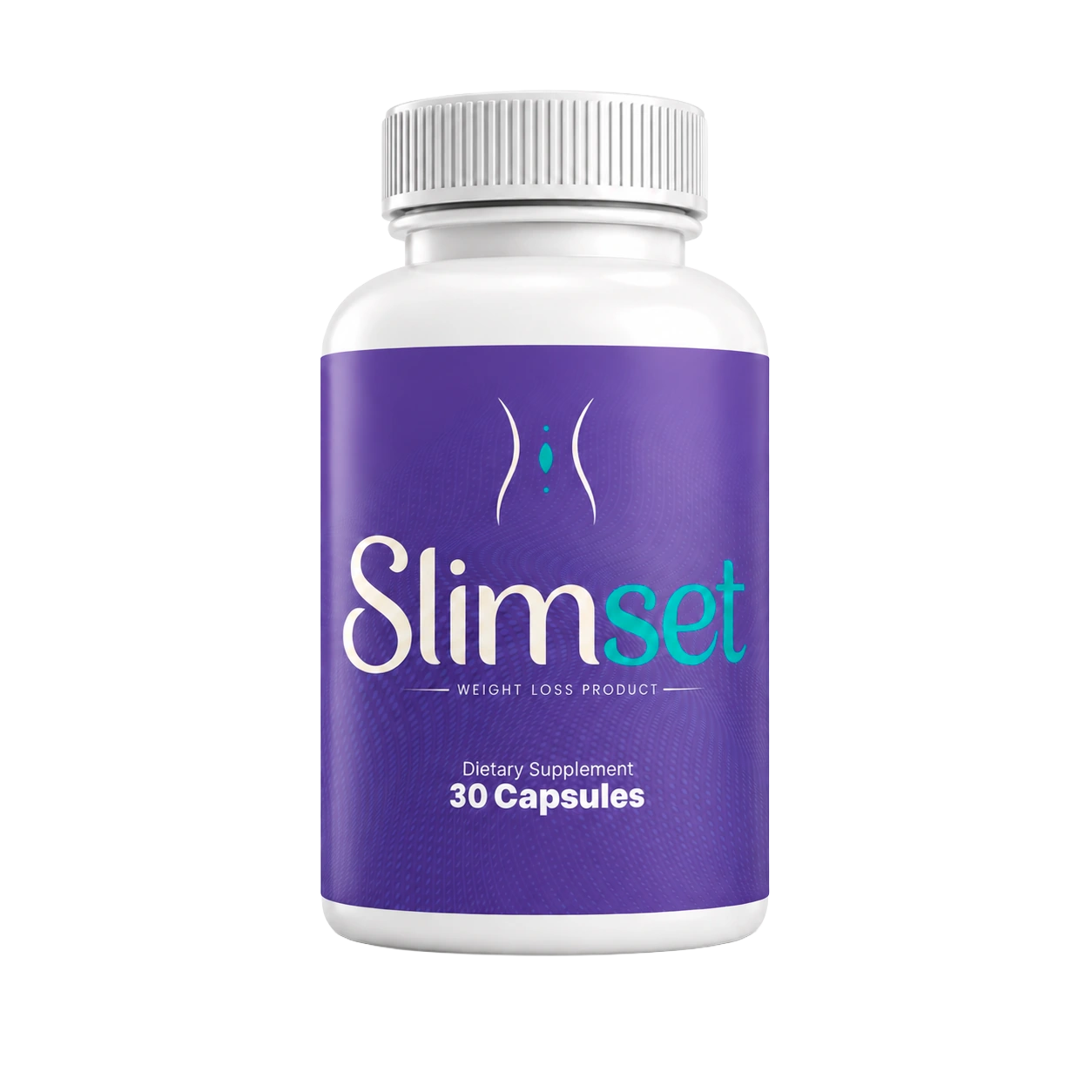
See the whole SlimSet panel converted
Five printed rows, three printed standardisations, and every one of them carried through to the milligrams a capsule delivers. The caffeine is the row with the clearest answer and the other four are worth the same arithmetic.
One bottle $89 · six bottles $294 · 60-day money-back guarantee
Order SlimSet On The Official WebsiteOne capsule a day · 30 per bottle · lot SLI-26/MY-3272
The evening problem
A controlled trial of caffeine timing gave 400 mg of caffeine zero, three and six hours before bed and measured sleep objectively. All three conditions produced significant disruption, including the six-hour arm, where the participants themselves did not report noticing it.
That last detail is the one that matters. Self-reported sleep quality is a poor instrument for detecting caffeine's effect, which means a person can be losing sleep to an afternoon dose and be entirely confident they are not.
The label directs the capsule 20 to 30 minutes before a meal without naming which meal. Breakfast is the version that leaves the evening alone. A capsule taken before dinner buys the same botanical exposure and a worse night, which is a straightforwardly bad trade.
Blood pressure, and why it fades
A dose-response meta-analysis found caffeine supplementation raised blood pressure, with the effect scaling with dose. A meta-analysis of chronic intake adds the other half: the pressor effect attenuates with habitual consumption, so a regular coffee drinker starting this capsule is in a different position from somebody who drinks none.
An umbrella review of coffee and caffeine outcomes across a very large literature found moderate intake broadly benign for healthy adults and flagged the populations where that does not hold. Anyone treated for hypertension is asking a question about their own treatment rather than about a supplement, and that question has a specific answer that a website cannot supply.
The practical reading for this bottle: a habitual coffee drinker adding 138 mg is making a smaller change than the figure suggests, and somebody who drinks none is making a larger one.
What to do with all this
Four things follow from the arithmetic above, and none of them requires any judgement about whether the rest of the formula works.
- Count the capsule. 138 mg is not a rounding error and it is the item people forget.
- Take it in the morning. The label's window is satisfied by breakfast and the evening is left alone.
- Subtract a mug rather than adding one. The total is what matters, not the source.
- Treat the declared figure as a floor. The extracts add an amount nobody has published.
Jitteriness, a racing heart or a ruined night in the first few days is the caffeine introducing itself, and it is the fastest answer this bottle gives about whether it suits you. The 60-day window covers exactly that situation, and one bottle at $89 answers the question as well as six do.
The broader point is about reading rather than about this bottle. A caffeine figure printed as its own row can be counted. A caffeine figure hidden inside a botanical cannot, and a day that cannot be totalled is a day being added to blind. On that specific measure this label is better than most of the shelf it sits on, and the gap it does leave is the green coffee row.
References
- Nawrot P, Jordan S, Eastwood J, et al. Effects of caffeine on human health. Food Addit Contam. 2003;20(1):1-30. PMID 12519715. https://pubmed.ncbi.nlm.nih.gov/12519715/
- Longhi GS, Crocoli LC, Armando YP, et al. Too much or too little caffeine? Determination of content in thermogenic capsules by quantitative 1H nuclear magnetic resonance (qNMR). J Pharm Biomed Anal. 2025;261:116832. PMID 40179616. https://pubmed.ncbi.nlm.nih.gov/40179616/
- Drake C, Roehrs T, Shambroom J, et al. Caffeine effects on sleep taken 0, 3, or 6 hours before going to bed. J Clin Sleep Med. 2013;9(11):1195-200. PMID 24235903. https://pubmed.ncbi.nlm.nih.gov/24235903/
- Abbas-Hashemi SA, Hosseininasab D, Rastgoo S, et al. The effects of caffeine supplementation on blood pressure in adults: a systematic review and dose-response meta-analysis. Clin Nutr ESPEN. 2023;58:165-177. PMID 38057002. https://pubmed.ncbi.nlm.nih.gov/38057002/
- Noordzij M, Uiterwaal CS, Arends LR, et al. Blood pressure response to chronic intake of coffee and caffeine: a meta-analysis of randomized controlled trials. J Hypertens. 2005;23(5):921-8. PMID 15834273. https://pubmed.ncbi.nlm.nih.gov/15834273/
- Grosso G, Godos J, Galvano F, et al. Coffee, caffeine, and health outcomes: an umbrella review. Annu Rev Nutr. 2017;37:131-156. PMID 28826374. https://pubmed.ncbi.nlm.nih.gov/28826374/
- Dulloo AG, Duret C, Rohrer D, et al. Efficacy of a green tea extract rich in catechin polyphenols and caffeine in increasing 24-h energy expenditure and fat oxidation in humans. Am J Clin Nutr. 1999;70(6):1040-5. PMID 10584049. https://pubmed.ncbi.nlm.nih.gov/10584049/
- SlimSet product label artwork, supplied in the vendor asset pack. Serving size one capsule, 30 per container. Distributed by Slimset, PO Box 12730, Ogden, UT 84412.