SlimSet Official Website › Blog › EGCG And The Green Tea Trials
58.5 mg Of EGCG: What The Green Tea Weight-Loss Trials Found
Green tea catechins have been pooled and re-pooled across three decades of trials, and the clearest finding to come out of that literature is not a dose threshold. It is a condition: catechins alone did not move body weight in the pooled data, and catechins alongside caffeine did, modestly. This panel happens to supply both, and this article works through what that pairing is actually worth.
- A 2010 meta-analysis in the American Journal of Clinical Nutrition found catechins with caffeine reduced body weight, BMI and waist circumference, but catechins without caffeine showed no benefit on any of those measures.
- A Cochrane review found green tea preparations produced only a small, statistically non-significant weight change overall.
- A 2024 meta-analysis found green tea added only a small effect on top of exercise training.
- This label’s 130 mg row at 45% EGCG delivers about 58.5 mg of EGCG, alongside its own under-3% caffeine and a further 138 mg of caffeine anhydrous elsewhere on the panel.
- The condition the strongest meta-analysis attached to any result — catechins plus caffeine — is the one this formula is actually built around.
EGCG, catechins and the rest of the row
Green tea extract is standardised in layers, and this label prints three of them on one line: 98% polyphenols, 75% catechins, and 45% EGCG (epigallocatechin gallate), with a note that the extract itself carries under 3% caffeine. Polyphenols is the broadest category; catechins are the specific polyphenol family tea is known for; EGCG is the single most-studied catechin within that family and usually the one trials report a dose for.
Run the label’s own arithmetic on all three layers, at 130 mg of extract: about 127 mg of polyphenols, about 97.5 mg of catechins, and about 58.5 mg of EGCG specifically. Those numbers nest inside each other, as they should, because EGCG is a subset of catechins, which is a subset of polyphenols.
The meta-analysis with a condition attached
A 2010 systematic review and meta-analysis in the American Journal of Clinical Nutrition pooled fifteen randomised trials, 1,243 participants in total, and split them by whether the green tea catechins were given with or without caffeine.
The split produced a genuinely interesting result. Catechins given with caffeine reduced BMI by 0.55 (95% CI: −0.65 to −0.40), body weight by 1.38 kg (95% CI: −1.70 to −1.06), and waist circumference by 1.93 cm (95% CI: −2.82 to −1.04), compared with caffeine alone. Against a caffeine-free control, the caffeine-plus-catechins combination still reduced body weight by 0.44 kg (95% CI: −0.72 to −0.15). Trials that gave catechins without any concomitant caffeine, by contrast, showed no benefit on any of the measured outcomes.
The authors’ own conclusion draws the line plainly: catechins with caffeine produced statistically significant reductions, but the clinical significance of those reductions is modest at best, and the current data does not suggest catechins alone do anything measurable.
| Comparison | Body weight change | Statistically significant? |
|---|---|---|
| Catechins + caffeine vs. caffeine alone | −1.38 kg | Yes |
| Catechins + caffeine vs. caffeine-free control | −0.44 kg | Yes |
| Catechins without added caffeine vs. control | No benefit detected | No |
All three rows are from the same 2010 meta-analysis, pooling fifteen trials and 1,243 participants.
The Cochrane review, and why it reads more cautious
A Cochrane systematic review took a broader view of the same category, pooling green tea preparations generally rather than splitting specifically by caffeine content. Studies conducted outside Japan showed a mean weight difference of just −0.04 kg against control, not significant. Studies conducted in Japan were too heterogeneous to pool, with individual results ranging from a 0.2 kg loss to a 3.5 kg loss.
The review’s own conclusion: green tea preparations appear to induce a small, statistically non-significant weight loss in overweight or obese adults, unlikely to be clinically important, with no significant effect on weight maintenance afterward.
Reading the 2010 meta-analysis and the Cochrane review side by side is more informative than reading either alone. The 2010 review found a real, if modest, effect specifically when caffeine was present alongside the catechins. The Cochrane review, pooling without that split, found an overall result close to zero. Those two findings are not contradictory — they are consistent with caffeine being the variable doing most of the work in the trials where any effect showed up at all.
A 2024 look at green tea plus exercise
The most recent addition to this literature took a different angle. A 2024 systematic review and meta-analysis pooled ten randomised trials comparing green tea alongside exercise training against exercise training with placebo. It found a small, consistent additional effect on weight (SMD −0.30), BMI (SMD −0.33) and fat mass (SMD −0.29), with no additional benefit on lipid profile measures.
The authors’ own framing: green tea could have quite minimal additive benefit over exercise-induced weight loss. That is a smaller claim than most retail marketing for this ingredient makes, and it is also the most methodologically current data point available.
What this panel actually delivers
| This panel | |
|---|---|
| Green tea extract printed | 130 mg |
| Standardisation printed | 98% polyphenols, 75% catechins, 45% EGCG, <3% caffeine |
| Total catechins delivered | about 97.5 mg |
| EGCG delivered specifically | about 58.5 mg |
| Caffeine carried by this row alone | under 3.9 mg, on the label’s own <3% figure |
All figures are this label’s own printed percentages carried through the 130 mg amount.
Placing 58.5 mg of EGCG against a literature that mostly reports total catechins rather than isolated EGCG is where this comparison has to stay honest about its limits: the trials pooled in the reviews above did not standardise on a single catechin or EGCG dose, and none of the three cited reviews reports one clean number this panel’s 58.5 mg can be measured against the way the chlorogenic acid literature offers a clean 500 mg threshold for green coffee. What the reviews do offer is the condition described above, and that condition is checkable against this exact panel.
The pairing this formula is built around
This is the detail worth carrying away from three separate meta-analyses: every one of them found that caffeine’s presence, not the catechin dose by itself, was the variable associated with a measurable result. Catechins without caffeine did nothing detectable in the pooled 2010 data. Catechins with caffeine moved the number, modestly, consistently, across multiple independent reviews spanning 2010 to 2024.
This label does not rely on the green tea row’s own under-3% caffeine to satisfy that condition. The panel separately carries 138 mg of caffeine anhydrous, on top of whatever caffeine the green coffee bean row contributes. This site’s article on the total caffeine load works through that full accounting. The point for this article is narrower: the condition every green tea meta-analysis attaches to its modest positive result — catechins alongside caffeine — is structurally present in this formula, by design rather than by accident.
That is a fact about the formula’s structure, not a guarantee about what one capsule a day at these exact amounts will do for any individual. No cited trial tested this specific five-ingredient combination.
What none of these trials can tell you
- None of the cited reviews tested a finished five-ingredient capsule; all pooled trials of green tea preparations in isolation or alongside exercise.
- None reports a clean EGCG-specific dose threshold the way the chlorogenic acid literature reports one for green coffee.
- The Japanese and non-Japanese studies in the Cochrane review produced different enough results that the reviewers could not pool them, which is itself a sign of real heterogeneity in how this ingredient performs across populations and formulations.
- “Modest at best,” the 2010 review’s own phrase, describes even the positive, caffeine-paired result. It is not language that supports a large or fast outcome.
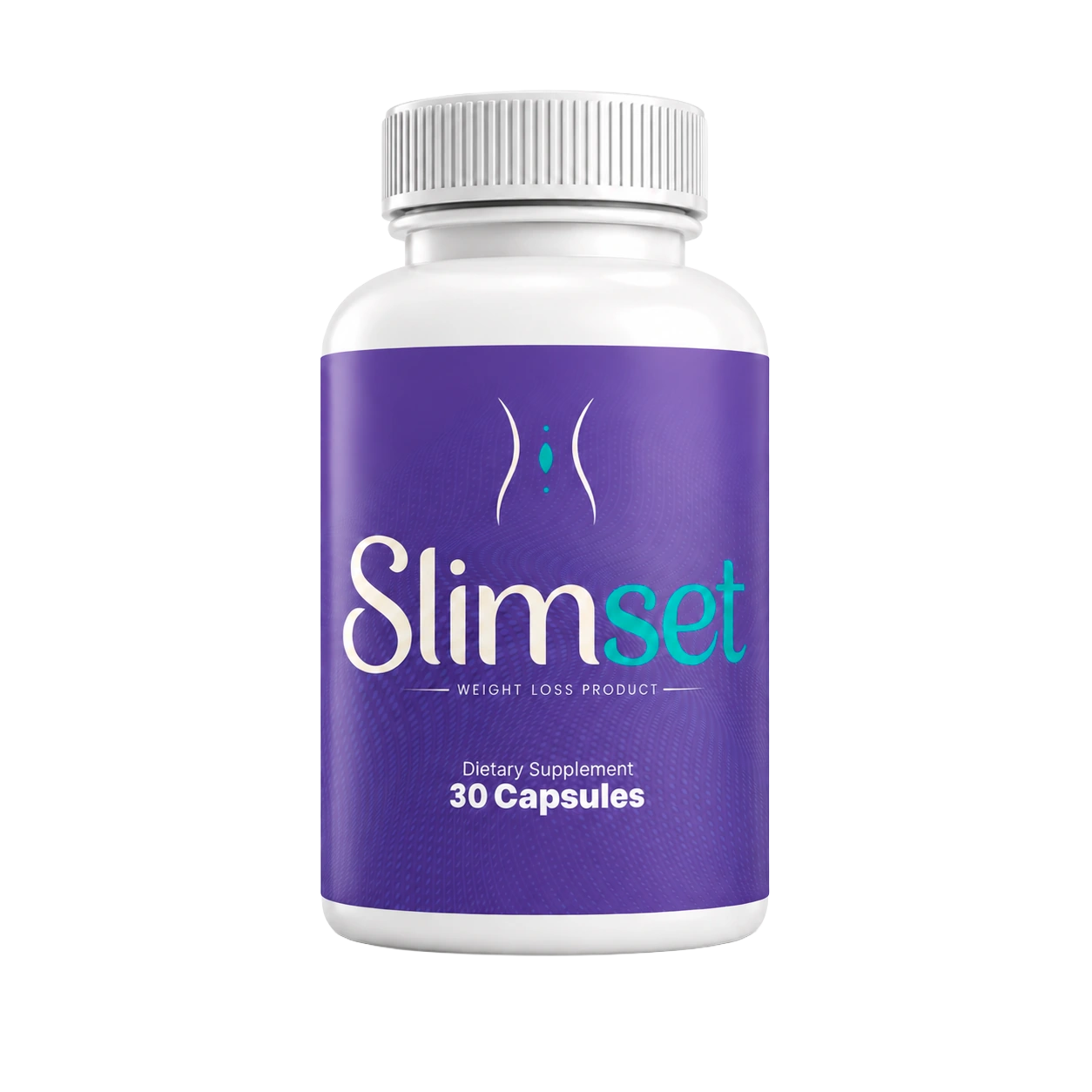
See how the caffeine and catechins add up across the whole panel
Three of the five rows print a standardisation, so three of the five can be carried through to the compound the research studied. The supplement facts page sets each one beside its trial dose.
One bottle $89 · six bottles $294 · 60-day money-back guarantee
Order SlimSet On The Official WebsiteOne capsule a day · 30 per bottle · lot SLI-26/MY-3272
The safety half of this ingredient, covered elsewhere
Green tea extract also carries a published liver-injury case literature, entirely separate from the efficacy question this article covers. This site has already reviewed that safety record in full, alongside garcinia’s own case reports, in Garcinia And Green Tea Taken Together. This article stays on the efficacy trials and what this exact EGCG amount can and cannot be measured against.
What this means at a shelf
- Find the standardisation, and note that a panel giving polyphenols, catechins and EGCG separately is unusually detailed for this category.
- Do the sum for EGCG specifically, since that is the compound most trials report a figure for.
- Check whether the product also carries caffeine elsewhere on the label, since the strongest pooled results all required it.
- Treat “modest at best” as the ceiling the published evidence supports, not a floor marketing copy can round up from.
- Remember that no trial has tested this specific five-ingredient formula as a whole.
Applied to this bottle: the row is printed, three standardisation layers are printed, the EGCG sum comes to about 58.5 mg, and the caffeine the pooled trials found necessary for any measurable result sits elsewhere on the same panel at 138 mg. That is the honest shape of the evidence for this ingredient as it is actually sold here — not a guaranteed outcome, but a formula structured around the one condition three independent meta-analyses agree matters.
A dietary supplement for healthy adults of 18 and over, not a medicine and not FDA-approved. The bottle prints no specific weight-loss guarantee, and its own caution rules out anyone pregnant or nursing, anyone under 18, and anyone with a known medical condition who has not raised it with a clinician first. This article does not change that ceiling in either direction.
References
- Phung OJ, Baker WL, Matthews LJ, Lanosa M, Thorne A, Coleman CI. Effect of green tea catechins with or without caffeine on anthropometric measures: a systematic review and meta-analysis. Am J Clin Nutr. 2010;91(1):73-81. PMID 19906797. https://pubmed.ncbi.nlm.nih.gov/19906797/
- Jurgens TM, Whelan AM, Killian L, Doucette S, Kirk S, Foy E. Green tea for weight loss and weight maintenance in overweight or obese adults. Cochrane Database Syst Rev. 2012;12(12):CD008650. PMID 23235664. https://pubmed.ncbi.nlm.nih.gov/23235664/
- Gholami F, Antonio J, Iranpour M, Curtis J, Pereira F. Does green tea catechin enhance weight-loss effect of exercise training in overweight and obese individuals? A systematic review and meta-analysis of randomized trials. J Int Soc Sports Nutr. 2024;21(1):2411029. PMID 39350601. https://pubmed.ncbi.nlm.nih.gov/39350601/
- Yang CS, Zhang J, Zhang L, Huang J, Wang Y. Mechanisms of body weight reduction and metabolic syndrome alleviation by tea. Mol Nutr Food Res. 2016;60(1):160-74. PMID 26577614. https://pubmed.ncbi.nlm.nih.gov/26577614/
- SlimSet product label artwork, supplied in the vendor asset pack. Serving size one capsule, 30 per container. Distributed by Slimset, PO Box 12730, Ogden, UT 84412.