SlimSet Official Website › Blog › How Much Is A Kilo
How Much Is A Kilo? Supplement Trial Results Against The 5 Percent Line
Read enough supplement research and you notice the same size of result turning up again and again: a kilo or so, lower than the comparison group, after twelve weeks. Whether that is a triumph or a rounding error depends entirely on the yardstick. This article supplies one, so that the next pooled result you meet can be measured against something other than the headline it arrived under.
- The pooled garcinia result was 0.88 kg lower than placebo. The pooled green tea catechin and caffeine result was 1.38 kg, and 0.44 kg against a caffeine-free control.
- Five per cent of body weight is 3.5 kg at 70 kg, 4.25 kg at 85 kg and 5 kg at 100 kg. A 0.88 kg result is about a fifth of that line.
- Diet trials with reduced-energy eating averaged 5 to 8.5 kg in the first six months. Advice alone and exercise alone averaged very little.
- Less than 5 per cent is not worthless: a 2025 systematic review found improvements in health markers in 60 per cent of low-level weight-loss studies.
- The useful habit is to convert any result to a percentage of your own weight before reacting to it.
Why a kilo needs a yardstick
Numbers on their own are slippery. Tell someone a supplement helped people lose 0.88 kilograms and half of them will hear a real result, because it is a number with a decimal point and a unit, and the other half will hear nothing much, because it is under a kilo. Both reactions are reasonable. Neither is informed, because neither has anything to compare the number with.
The other posts on this blog work ingredient by ingredient. The EGCG article reads the green tea trials, the chlorogenic acid article reads green coffee, and the garcinia article reads the safety file on a pairing. Each ends up somewhere on the same road: a real but small pooled effect, or none. What they do not do is stop and ask the plain question this one asks. Small compared with what?
So this article builds the yardstick. It collects the sizes that pooled analyses of these ingredients have reported, converts them into percentages of body weight, and sets them against two benchmarks: the amount of weight loss that clinicians have tended to treat as meaningful, and the amount ordinary diet trials actually achieve. Nothing here is a result for this product. It is a way of reading everyone else’s.
The sizes the supplement trials reported
Three analyses carry most of the weight, and each is available in full on PubMed.
The garcinia meta-analysis by Onakpoya and colleagues found 23 eligible trials, included 12 and pooled 9. The pooled difference favouring hydroxycitric acid over placebo was 0.88 kg, with a 95 per cent confidence interval running from 1.75 kg down to essentially zero. The authors described the difference as small and the clinical relevance as uncertain, and noted that gastrointestinal adverse events were twice as common in the HCA group in one included study.
The green tea catechin meta-analysis by Phung and colleagues pooled 15 studies with 1,243 participants. The abstract reports body weight down by 1.38 kg (95 per cent CI 1.06 to 1.70) for catechins with caffeine, “compared with caffeine alone”, and by 0.44 kg (0.15 to 0.72) “when compared with a caffeine-free control”. Studies that gave catechins without caffeine showed no benefit on any measure. The authors’ conclusion was that the clinical significance of these reductions is “modest at best”.
The Cochrane review on green tea for weight loss and weight maintenance asked for trials of at least 12 weeks and found study lengths of 12 to 13 weeks. Six studies conducted outside Japan, with 532 participants, pooled to a difference of 0.04 kg (confidence interval from 0.5 kg lower to 0.4 kg higher), which is nothing. Eight studies conducted in Japan, with 1,030 participants, were too different to pool and ranged from 0.2 kg to 3.5 kg in favour of green tea. The reviewers concluded that green tea preparations appear to induce a small, statistically non-significant weight loss which is not likely to be clinically important.
| Analysis | What it pooled | Reported weight difference |
|---|---|---|
| Garcinia, 2011 | 9 trials of HCA against placebo | 0.88 kg lower (interval reaching zero) |
| Green tea catechins, 2010 | 15 studies, 1,243 people | 1.38 kg (catechins with caffeine, compared with caffeine alone); 0.44 kg against a caffeine-free control |
| Green tea, Cochrane 2012, outside Japan | 6 studies, 532 people | 0.04 kg lower (interval from 0.5 kg lower to 0.4 kg higher) |
| Green tea, Cochrane 2012, Japan | 8 studies, 1,030 people, not pooled | Ranged from 0.2 kg to 3.5 kg lower |
Figures as printed in the abstracts. The doses in these trials are not the doses on this panel, which is covered in the ingredient articles linked above.
Where the 5 per cent line comes from
A yardstick needs a reason to exist. The one used most often in weight management is five per cent of starting body weight, and the reason is not arbitrary. A 2017 review by Ryan and Yockey collected what is known about how health markers move at 5, 10 and 15 per cent loss.
Their account is graduated rather than a cliff. Improvement in blood sugar and triglycerides starts with small losses, and it takes only small amounts of weight loss to prevent progression from impaired glucose tolerance to type 2 diabetes. Modest loss of 5 to 10 per cent is also associated with improvements in blood pressure and HDL cholesterol. Some conditions need more: sleep apnoea and fatty liver disease, for example, tend to need 10 to 15 per cent before the improvement shows. Reduction in mortality may need more than 10 per cent, although the review says definitive studies have not been done.
The most useful sentence in it is the last. Clinicians, the authors write, should bear in mind that the target is health improvement rather than a number on the scale. The 5 per cent line is a common yardstick because it is where several measurable improvements begin to show up in the data, not because a person who lost 4.9 per cent has failed.
The same kilo at three body weights
Here is the conversion that the headline numbers leave out. A kilo means something different to different people, so the sensible thing is to turn each reported result into a percentage of body weight and then compare it with the line. The table below does it for three round starting weights: 70 kg (about 154 lb), 85 kg (about 187 lb) and 100 kg (about 220 lb).
| Starting weight | The 5% line | 0.44 kg | 0.88 kg | 1.38 kg | 3.5 kg |
|---|---|---|---|---|---|
| 70 kg | 3.5 kg (7.7 lb) | 0.6% | 1.3% | 2.0% | 5.0% |
| 85 kg | 4.25 kg (9.4 lb) | 0.5% | 1.0% | 1.6% | 4.1% |
| 100 kg | 5.0 kg (11.0 lb) | 0.4% | 0.9% | 1.4% | 3.5% |
Simple division, rounded to one decimal place. The 3.5 kg column is the top of the range in the Japanese green tea studies in the Cochrane review, which is the only reported figure that reaches the line, and only for the lightest person in the table.
Read across the rows. The pooled garcinia figure is 0.9 to 1.3 per cent of body weight, roughly a fifth to a quarter of the way to the line. The catechin-with-caffeine figure is 1.4 to 2.0 per cent, a little over a quarter to two-fifths of the way. The caffeine-free comparison is under 1 per cent. None of the pooled figures gets near five per cent. Only the best individual Japanese study reaches it, and only at the lower body weight.
That is not an insult to the ingredients. It is a size, and the size is small, which is precisely what the authors of these papers said in their own conclusions. The yardstick simply lets you feel the size rather than take it on trust.
What diet trials achieve, for scale
The other comparison worth making is with the trials of ordinary weight-loss interventions, because they tell you what the same kind of study looks like when the intervention is a large one. Franz and colleagues searched for randomised trials with at least one year of follow-up and found 80. They grouped them by intervention type and pooled the amount lost at 6, 12, 24, 36 and 48 months.
Interventions involving a reduced-energy diet and/or weight-loss medications produced a mean loss of 5 to 8.5 kg (5 to 9 per cent) in the first six months, with a plateau at about six months. In studies that ran to 48 months, a mean of 3 to 6 kg (3 to 6 per cent) was still being maintained, and no group had regained all of it. By contrast, the advice-only groups and the exercise-alone groups had lost minimal weight at any time point.
Set that beside the first table. A structured, reduced-energy programme produced several kilos at six months in trials that lasted years. The supplement trials produced about a kilo, over twelve weeks, on top of whatever else the participants were doing. The two figures do not compete, because the supplements were tested as add-ons and the diets were the intervention, but they do show where the large effects live.
Does less than 5 per cent count for anything?
It would be easy to read the last section as saying anything under 5 per cent is noise, and that would be wrong. A 2025 systematic review by Dhar and colleagues was designed to test that assumption. It searched seven databases for intervention studies that measured health markers after a loss of less than 5 per cent of body weight, and found 70 studies from 68 articles, with between 14 and 10,742 participants.
Across 137 different markers, 60 per cent of the studies reported improvements, 37 per cent found no change or mixed results, and 3 per cent found worsening. The review reports that 87 per cent of participants (n = 15,839) had improvements in health markers or indices. The authors’ conclusion was that low-level weight loss can lead to various health benefits, and that this challenges the conventional threshold for effective weight loss.
Two cautions keep that in proportion. The included studies were intervention studies of many kinds, none of them a study of this product, and a mixed 37 per cent is a large minority to wave away. What the review supports is the idea that a modest change is not automatically meaningless. It does not support the idea that a supplement trial’s 0.9 kg is a health outcome, because those trials did not measure health outcomes.
Reading a supplement result honestly
Put these pieces together and a set of habits falls out, none of which requires any statistical training.
- Convert it. Divide the reported difference by a plausible body weight. A result of 0.9 kg for a 70 kg adult is about 1.3 per cent, and it is far easier to compare that with 5 per cent than 0.9 with nothing.
- Look at the interval, not just the middle. The garcinia interval ran to essentially zero. The Cochrane interval outside Japan straddled it. A result whose confidence interval touches no effect is a result that might be one.
- Ask what the comparison was. The green tea abstract reports two comparisons that answer different questions, and the sizes differ by a factor of three. Which one a headline is quoting matters.
- Note the length. Twelve to thirteen weeks is a short window for a body weight outcome. Franz’s trials plateaued at six months and were followed for years.
- Separate significance from importance. A pooled result can be statistically real and still small, which is exactly what two of these three analyses said about themselves.
- Check whether the dose matches. A pooled figure comes from whatever doses the included trials used. The ingredient articles on this blog compare those with the amounts on this panel, and where the two differ they say so.
Using this on your own 60 days
The practical use of a yardstick is to set it before you start rather than after. The guarantee runs for 60 days from the date of purchase, and the results timeline notes that most reviewers describe judging a bottle somewhere in weeks four to eight. That is a natural moment to ask what you would have needed to see, and it is easiest to answer honestly if you wrote the answer down on day one.
- Write your starting weight and what 1 per cent and 5 per cent of it come to.
- Decide in advance what would count as worth reordering, in your own terms. It might be a number, a habit that stuck, or how the mornings feel.
- Record what else is changing. If you are eating differently and moving more, the capsule is one of several variables, and the diet trials above suggest it is not the largest.
- Read the result against your own yardstick around day 55, which leaves time to call the desk if you decide to return the bottles.
None of this predicts what a bottle will do for you. It makes sure that whatever it does, you will know how big that is.
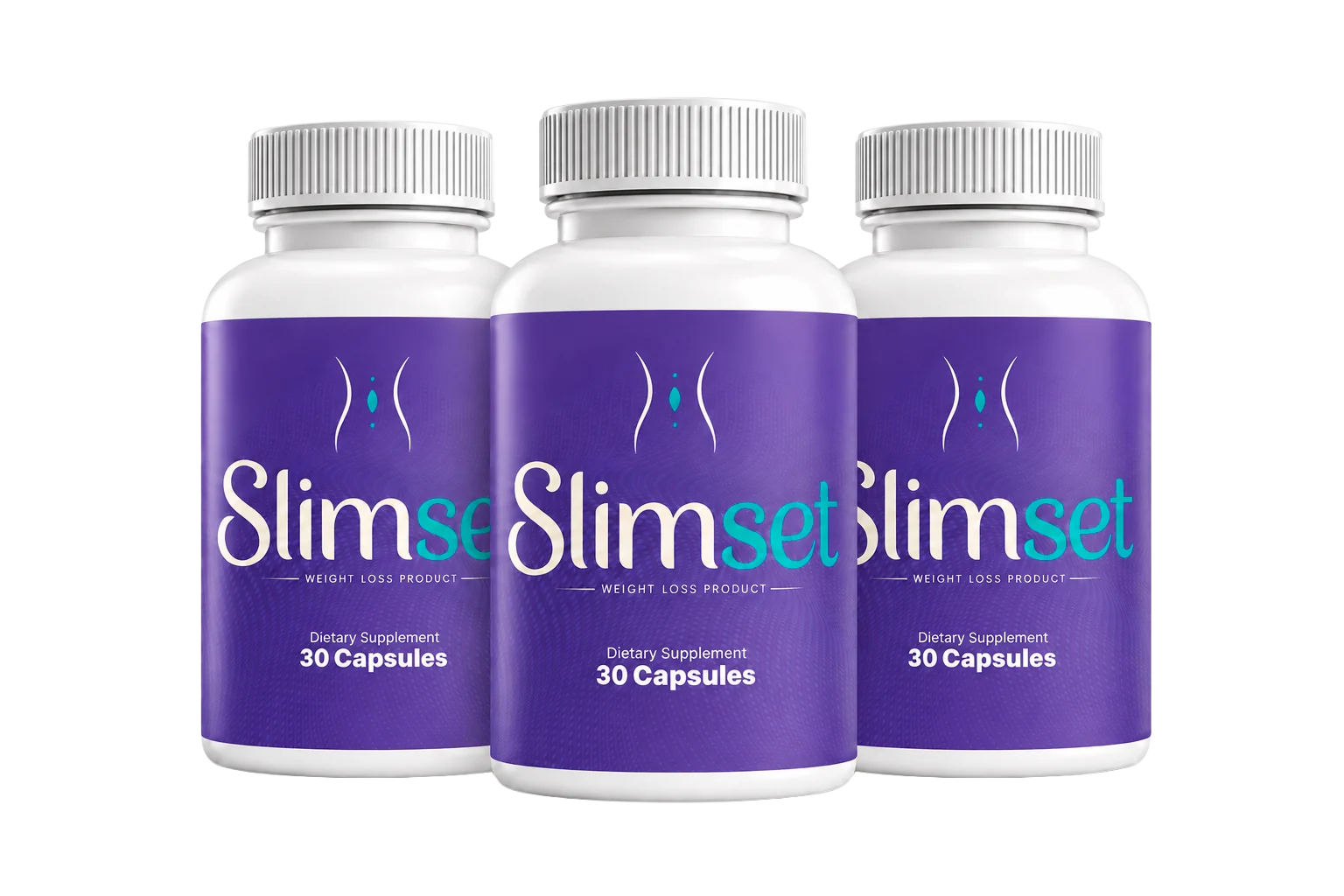
A dietary supplement for healthy adults of 18 and over, not a medicine and not FDA-approved. Every weight figure in this article comes from trials of other products and doses, and none is a result for this bottle. The bottle prints no support claim of its own beyond the category line, “Dietary Supplement” and “30 Capsules”.
References
- Onakpoya I, Hung SK, Perry R, Wider B, Ernst E. The Use of Garcinia Extract (Hydroxycitric Acid) as a Weight loss Supplement: A Systematic Review and Meta-Analysis of Randomised Clinical Trials. J Obes. 2011;2011:509038. PMID 21197150. https://pubmed.ncbi.nlm.nih.gov/21197150/
- Phung OJ, Baker WL, Matthews LJ, Lanosa M, Thorne A, Coleman CI. Effect of green tea catechins with or without caffeine on anthropometric measures: a systematic review and meta-analysis. Am J Clin Nutr. 2010;91(1):73-81. PMID 19906797. https://pubmed.ncbi.nlm.nih.gov/19906797/
- Jurgens TM, Whelan AM, Killian L, Doucette S, Kirk S, Foy E. Green tea for weight loss and weight maintenance in overweight or obese adults. Cochrane Database Syst Rev. 2012;12(12):CD008650. PMID 23235664. https://pubmed.ncbi.nlm.nih.gov/23235664/
- Ryan DH, Yockey SR. Weight Loss and Improvement in Comorbidity: Differences at 5%, 10%, 15%, and Over. Curr Obes Rep. 2017;6(2):187-194. PMID 28455679. https://pubmed.ncbi.nlm.nih.gov/28455679/
- Franz MJ, VanWormer JJ, Crain AL, Boucher JL, Histon T, Caplan W, et al. Weight-loss outcomes: a systematic review and meta-analysis of weight-loss clinical trials with a minimum 1-year follow-up. J Am Diet Assoc. 2007;107(10):1755-67. PMID 17904936. https://pubmed.ncbi.nlm.nih.gov/17904936/
- Dhar D, Packer J, Michalopoulou S, Cruz J, Stansfield C, Viner RM, et al. Assessing the evidence for health benefits of low-level weight loss: a systematic review. Int J Obes (Lond). 2025;49(2):254-268. PMID 39487296. https://pubmed.ncbi.nlm.nih.gov/39487296/
- SlimSet product label artwork, supplied in the vendor asset pack. Serving size one capsule, 30 per container.